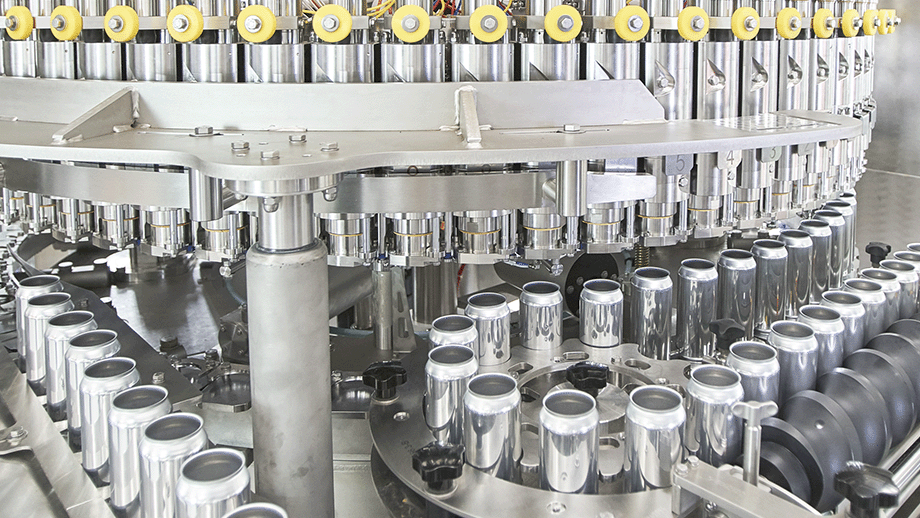
Filling and sealing machine for cans: when does a monoblock make sense?
If you are considering a can filling and seaming machine, the first choice you will need to make concerns its layout. We build two: a monoblock and a biblock. We supply one or the other depending on the output you need. This article explains when a filler-seamer monoblock makes sense, when a biblock is the answer, and what each means for your plant in terms of space and hygiene.
It is written for technical managers, plant managers and procurement teams alike.
What a filler and a seamer each do
The filler doses the product into the can. For carbonated drinks it works in counter-pressure condition: the can is pressurized first, so the gas stays in the drink while it fills. Still drinks, such as juices, can be filled by gravity, and some are filled hot.
The seamer closes the can. It joins the lid to the can body with a double seam, a mechanical fold that interlocks the two parts. The quality of that seam decides whether the can holds pressure, stays leak-free and protects the product throughout its shelf life.
A note on words. In the can industry the closing step is called seaming, while many buyers search for a filling and sealing machine or a filling sealing machine. They mean the same job: fill the can, then close it. In this article we use “seaming” for the closing step and “filling and sealing machine” for the equipment that does both.
Monoblock or biblock: two layouts
In both layouts the filling and sealing machine does the same job: it fills the can, then closes it. What changes is how the two machines are built. You will also see a filler-seamer monoblock called a can filler seamer, a filler seamer or a can filling and seaming machine. The words change, the idea does not.
Monoblock
Filler and seamer form one compact machine, with a short transfer between filling and seaming. It runs with one set of connections to utilities and line controls, and there is one machine to adjust at each format change.
Biblock
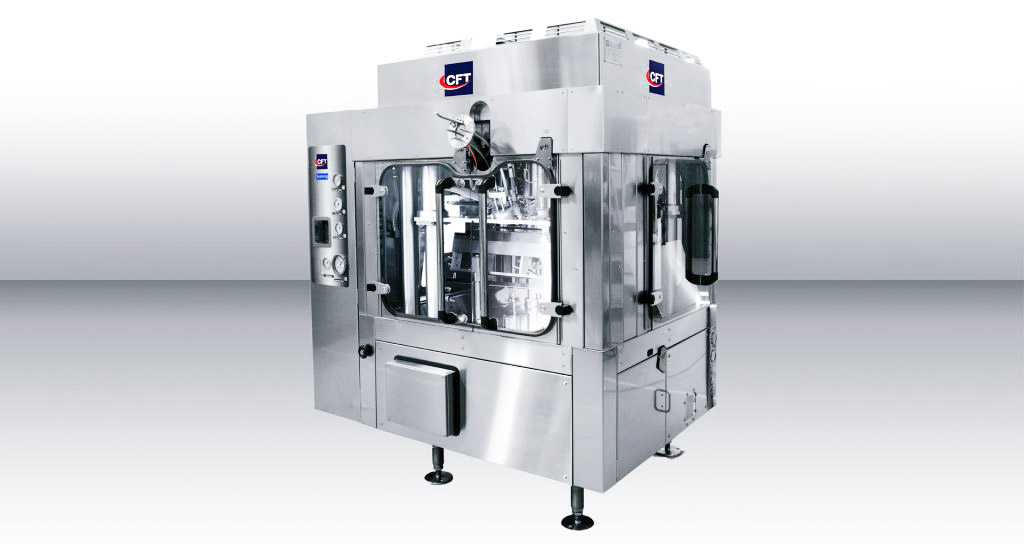
Filler and seamer stay two bodies on two separate bases, but they are built to run as one machine. The connections and the format change work as in a monoblock. The two bodies are joined by a longer conveyor, which is designed to limit spillage, foaming and air contact. The layout needs more space. Each body can be replaced or upgraded on its own.
Filling and sealing machine: when does a monoblock make sense?
Output decides which layout we propose. Space and hygiene then tell you what to expect in your plant.
1. Output
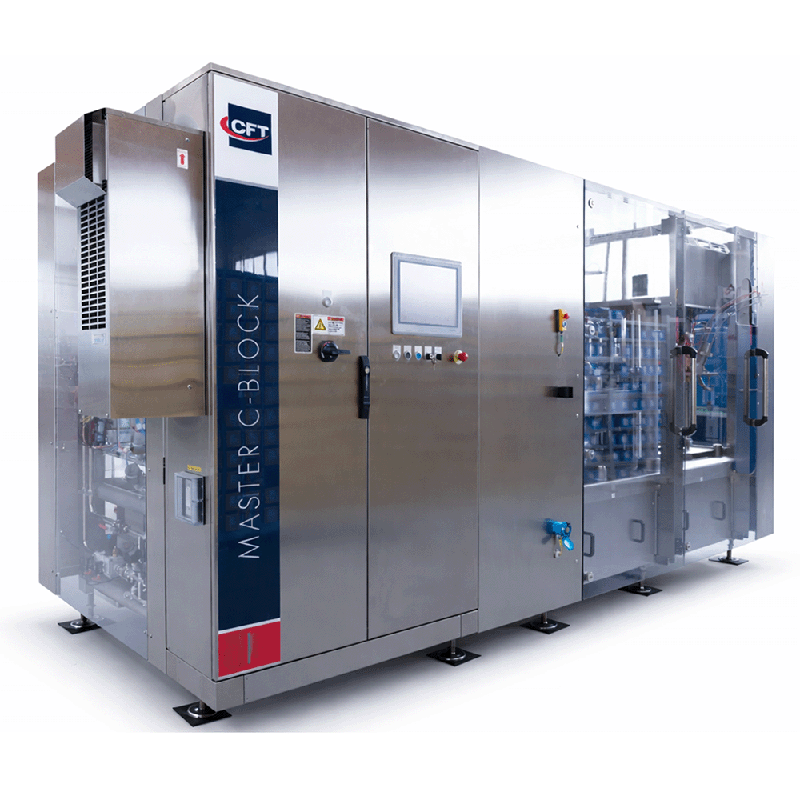
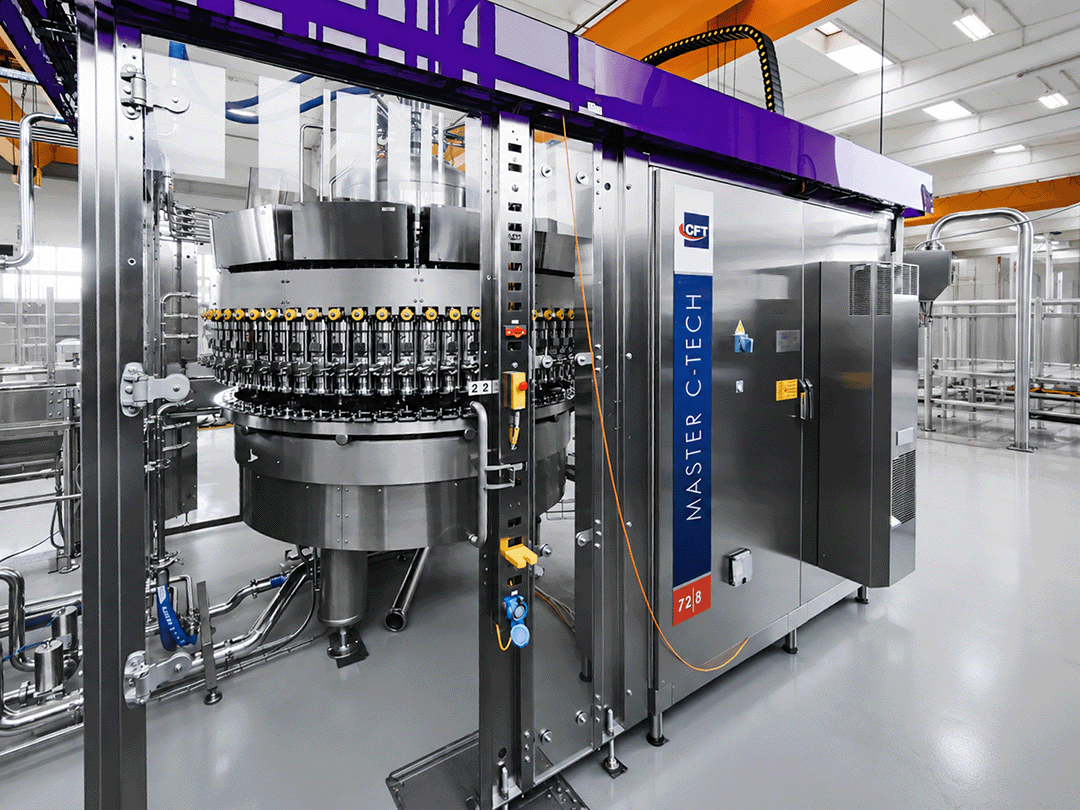
We supply a monoblock or a biblock according to the capacity you need. Our monoblock, the Master C-Block, covers 7,000 to 36,000 cans per hour. Our biblock, the Master C-Tech, covers 20,000 to 70,000. If your output sits within the monoblock range, a monoblock is the natural choice. For higher outputs, the biblock is the answer.
2. Space and installation
A monoblock is more compact and plug and play. A biblock puts filler and seamer on two bases and requires more space. When floor space is limited, this is the first thing to check.
3. Hygiene and cleaning
Each layout meets hygiene requirements in its own way. A monoblock can be fitted with a washable base and a highly hygienic seamer. A biblock has no table, so it is cleaned directly on the floor, which makes cleaning easier.
Our monoblock and biblock: Master C-Block and Master C-Tech
The Master C-Block is our automatic monoblock for filling and seaming cans, compact and flexible. It has flow-meter technology, 24, 28, 36 or 40 filling valves and an integrated Seamer (model 2000L or a hybrid 3000 series). It covers 7,000 to 36,000 cans per hour, for beer, carbonated soft drinks, and still and hot-fill drinks. The Master C-Tech is our biblock for cans, for still or carbonated drinks. It combines counter-pressure filling and flow-meter technology with an integrated seamer, and it covers 20,000 to 70,000 cans per hour, depending on the configuration. Its seamer is the Seamer 3000/N (full oil lubrication) or hybrid, with 4 to 12 seaming heads. It is built in anti-corrosion steel for continuous operation, with minimal maintenance.
Servo motors, standard on the Master C-Tech, use less energy. They also report machine problems more clearly and can analyze the performance of the machine (torque).
On the control side, Memento is our HMI platform for all our filling and seaming machines. It shows the machine status in real time and gives clear indications of what to do for each malfunction. It also keeps 12 months of analytics, with reports that can be viewed and downloaded remotely.
Whichever layout you choose, we see the filling and sealing machine as one element of a beverage production and packaging line, from preparation to depalletizing, filling, seaming and packaging.
Two examples from our installations
Black Hops Brewing, Australia: a compact monoblock for canned beer
Black Hops Brewing, on the Gold Coast in Australia, installed a Master C-Block with 24 filling valves and flow-meter technology. It runs at 15,000 cans per hour, well inside the monoblock range. The line also includes a depalletizer, a case packer and a palletizer. The case highlights the compact design, reduced oxygen pickup during packaging, a separate CO2 flush recovery circuit and quick maintenance. Read the Black Hops case.
Trabajadores de Pascual, Mexico: carbonated and hot-fill drinks on one machine
Sociedad Cooperativa Trabajadores de Pascual needed a compact canning line for products with opposite requirements. The solution combines a Master C-Tech filler and a Seamer 3000. It fills carbonated drinks, such as colas, cold under isobaric conditions at 27,000 cans per hour. It fills still drinks, such as juices and energy drinks, hot at 18,000 cans per hour. The full story is in our article on the beverage canning line for carbonated and hot-fill drinks.
Filling and sealing machine: frequently asked questions
What is a can filler seamer?
A can filler seamer is a single machine that fills the can and closes it with a double seam. It is also called a filler-seamer monoblock or a can filling and seaming machine.
What is the difference between a monoblock and a biblock?
Both run as one machine. The monoblock is more compact and plug and play, while the biblock reaches higher outputs
Can one machine fill both carbonated and still drinks?
It can, if the filler is designed for it, as in the Pascual case above. Not every filler is built this way, so state your product range at the start of the project.
Talk to us about your canning project
Tell us your products, your output and the space you have, and we will help you choose the right filling and sealing machine, monoblock or biblock. Contact us to start the conversation. For commissioning, training and spare parts, see our Global Service page.